To all of the Knight Reader family.
Kelly passed away on July 08, 2017. She so much enjoyed reading and sharing her thoughts on so many books. This was only one of many outlets she used to share her love for books. This site was very special to her. Thank each of you for your comments. She will be missed not only by her family, but by the ones she shared that love with.
her dad
Girl, Stolen
Yesterday, I finished reading Girl, Stolen by April Henry. This book has been out since 2010, but I didn’t make time to read it until recently. Why, you ask? Well, there’s now a sequel, Count All Her Bones, and I couldn’t read that one until I finished the first book, so there you go.
Now, it’s time for a quick look at Girl, Stolen. This will be a short post because I feel like crap and want to go back to sleep, so let’s get started.

It was supposed to be a quick stop at the pharmacy for antibiotics. Who could have predicted that it would turn into a nightmare for Cheyenne Wilder? Lying in the backseat, blind and sick with pneumonia, Cheyenne thought her stepmom was getting into the driver’s seat, ready to take them both home. She soon realizes, however, that something is wrong. Her stepmom is not driving. Someone is stealing the car, and she’s along for the ride.
It doesn’t take long for Griffin to grasp that he’s just screwed up royally. He thought he’d stumbled upon a perfect score–and Escalade with keys in the ignition. He didn’t think to look in the backseat. Now, he’s got to figure out what to do…with both the car and the girl. His only saving grace may be that this girl is blind and can’t identify him. Maybe he can get out of this without too much trouble.
When Griffin delivers both car and girl to his father, the situation gets even more complicated. It seems that Cheyenne’s father is a big-wig at Nike, and Griffin’s dad wants to take advantage of that. He thinks this could turn into a huge payday. Griffin isn’t so sure about this plan, and he grows even more reluctant to participate when he realizes that his father (and his cronies) have no plans to keep Cheyenne alive.
Even though she’s blind, Cheyenne never stops trying to find a way out of this mess. She knows that Griffin is protecting her from the other men and what they plan to do with her, but surely he won’t think of aiding her escape. He’s the one who kidnapped her in the first place. Or would he consider helping her? Maybe he’s just as eager to end this fiasco as she is. Whatever the case, Cheyenne is determined to survive, and she’ll do whatever she must–even perhaps trust her abductor–to make it back home.
If you’ve read any of April Henry’s books, you know that she’s known for good, engrossing mysteries suitable for middle grade and young adult readers. This book is no different. It’s a quick read, perfect for reluctant readers, and it definitely keeps one’s interest from page to page.
Count All Her Bones, the sequel to Girl, Stolen, was released in May. As you may have guessed, given that there is a sequel in the first place, Cheyenne does survive in book one. From what I understand, though, her troubles are far from over. As soon as I finish a few other books, I’ll see just how much trouble she finds in book two.
For more information on Girl, Stolen and other mysteries by April Henry, check out the author’s website, Twitter, and Facebook.
Bang
Every once in a while, I come across a book that I know is going to wreck me. Sometimes, all it takes is a look at the cover or a glance at the description to realize that I better get the Kleenex ready. That’s what happened with Bang by Barry Lyga.

When Sebastian Cody was four years old, he did the unthinkable. He shot and killed his baby sister. It was an accident, but that event changed everything. It broke up his family, and it made Sebastian into a pariah. Everyone knows him as the kid who shot his sister.
It’s now ten years later, and Sebastian has nearly reached his breaking point. He’s certain it’s almost time for him to end his pain. He can’t escape what he did to his sister, but he can escape this life. He’s almost ready. Almost.
When his best friend, Evan, goes away for the summer, Sebastian is sure that he won’t see his friend again. He’s going to end his life, and nothing is going to stop him. His plans begin to change, however, when he meets Aneesa.
Aneesa is unlike anyone Sebastian has ever met. For one thing, she’s Muslim, which already makes her unique in his extremely white bread town. For another, she doesn’t know anything about Sebastian’s past. To her, he’s just Sebastian, awkwardly funny guy who charms her parents and makes delicious pizza.
Sebastian and Aneesa become fast friends–and partners in a pizza-making YouTube venture–and it’s almost enough to make Sebastian forget his plans. Could he possibly move past what happened to him all those years ago? Does he deserve friends and a future after what he did? He’s starting to think it’s possible.
But maybe all of the positive stuff in Sebastian’s life is too good to be true. After all, no one will ever let him forget his past. Even Aneesa’s friendship isn’t enough to blot out the pain. Can anything help him to move on, or is Sebastian fated to end his life the same way he ended his sister’s?
Like I said, this book wrecked me…so much so that I’m finding it difficult to write as much as I typically do. It is an outstanding piece of realistic fiction, and it’s sure to keep readers eager to turn the page. Yes, some of that enthusiasm could be morbid curiosity–will Sebastian end his life or not? But I’m hopeful that most people will want to keep reading to see if Sebastian finds his way through the darkness. Maybe they need to see him find a glimmer of hope so that they can seek their own measure of peace.
Aside from the deep stuff in Bang–and it does get pretty intense–I’d be remiss if I didn’t say that it made me hungry. Not something you expected in a book like this one, right? Well, when you read about Sebastian’s epic pizza creations, you’ll probably feel the same way. After reading the descriptions of his pizzas, Papa John’s just won’t cut it anymore. I’m not inspired to make my own pizzas or anything–I hate to cook–but I may have to venture beyond the traditional after this book. When I wasn’t using tissues to dry my tears, I’m pretty sure I was using them to wipe away drool. (Can you tell I’m on a diet? Is it too obvious?)
I’m not sure if Bang is a good fit for a middle school audience, but I definitely recommend it to YA readers. It’s a powerful book, a quick read, and it makes readers think about differences, friendship, forgiveness, and redemption.
To learn more about Bang, visit author Barry Lyga’s website or connect with him on Twitter, Facebook, or Tumblr.
Three Dark Crowns
I don’t know quite where to begin. I finished reading Three Dark Crowns by Kendare Blake a few hours ago, and I’m still processing what happened in this book, particularly the batcrap crazy ending. (I mean that in the best way.) This book is convoluted and vicious–perfect for fans of Kiersten White’s And I Darken and Sabaa Tahir’s An Ember in the Ashes–and I can hardly wait for more.
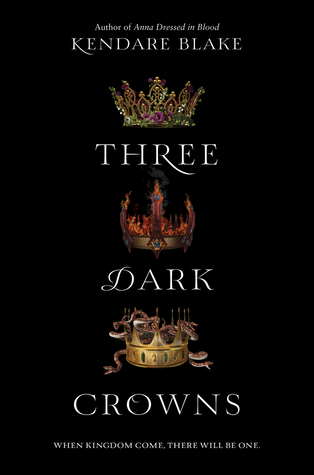
On the mysterious island of Fennbirn, three sisters–triplets–vie to be the last queen standing. Separated at an early age, the girls grow up knowing that they may one day have to kill their sisters in order to claim the crown. Each queen is supposed to be endowed with her own special brand of magic, and the strength of that magic could lead one of the young women to rule.
Katharine is a poisoner. She should be able to ingest even the most dangerous poison with no consequences. She can craft poisons with the best of them, but she cannot yet consume toxins without being violently ill. If her gift does not arrive soon–before Beltane–she fears that her quest for the throne will be short-lived.
Arsinoe is in a similar situation. She is a naturalist, but she cannot yet control even the smallest portion of the natural world around her, and there is no sign of her animal familiar on the horizon. Her companion, Jules, a powerful naturalist in her own right, has been trying to coax Arsinoe’s gift out of hiding, but the only magic Arsinoe experiences–dangerous spells performed with her own blood–may come with a cost more dire than she realizes.
Mirabella is widely considered to be the front-runner for the crown. She is a powerful elemental, and she has been controlling wind, fire, water, and earth for years. But Mirabella wonders if she’s truly capable of killing her sisters when the time comes. She remembers with fondness their lives before they were separated, and her unwillingness to do her sisters harm is viewed as weakness by those in power. Her path to the throne may seem clear, but her own feelings may cloud the way.
Each of these three sisters are attempting to figure out where they stand in Fennbirn, but they are running out of time to come to terms with their destinies. Their quests for the crown truly begin at the upcoming Beltane celebration. After that, two of them must die so that one can be queen. Add in questions about their gifts, power struggles from without and within, suitors vying for their hands, betrayal, and their own often conflicted feelings, and something has to give.
Will Katharine and Arsinoe receive their gifts before Beltane? If not, can they make others believe they are fit to be queen? Is Mirabella truly the most powerful of the three and destined to be the sole queen? Or does fate have something else in store for these sisters and those who would see them killed or crowned?
I’ve left out A LOT here, but I didn’t want to give too much away. I will say, however, that it’s difficult to determine which of the sisters–if any–should truly be queen. I felt sympathy with each of them at different points, but I can’t say that I was really rooting for any of them. As a matter of fact, I didn’t really like the sisters throughout much of the book. Jules, Arsinoe’s companion, was probably the only character in the book that I 100% liked. That’s okay, though. I think my conflicted feelings on these characters are exactly what the author intended. Nothing is clear cut in this book, and that makes things very intriguing.
For those wondering if Three Dark Crowns is a good fit for middle grade readers, I have to say…I’m not sure. It is brutal, and there are some sexy times (which are kind of understated). Some middle grade readers may be able to handle it; others won’t. I would probably recommend this book to grades 8 and up, but I urge you to read the book for yourself if you work with tweens and young teens. You know your readers better than I do.
The next book in this series, One Dark Throne, comes out on September 19th. There will also be a prequel novella, The Young Queens, released on December 26th. Lots to look forward to in this exciting series!
For more information on Three Dark Crowns, visit author Kendare Blake’s website or connect with her on Twitter. You may also want to check out the awesome book trailer from Epic Reads below. Enjoy!
Kill the Boy Band
I am a fangirl. I probably always have been, but we didn’t call ourselves that until recently. In my early years, I was crazy about the Smurfs, Rainbow Brite, She-Ra, and Barbara Mandrell (don’t ask). In my tween days, it was New Kids on the Block. (To be fair, I still like NKOTB. I’ve seen them in concert three times, and I’ll see them for the fourth time next month.) As a teenager, my Star Wars obsession really took off, and I now get all giddy about Harry Potter, Sherlock, Doctor Who, superheroes, and all sorts of other things. I totally own my fangirl ways. It makes me happy, and I’m not hurting anyone. And I guess that’s where I differ from the characters in my latest read, Kill the Boy Band by Goldy Moldavsky.

In this book, told from the perspective of one girl (whose real name is never revealed), we are introduced to four superfans of the Ruperts, a British boy band in which every guy’s first name is–you guessed it–Rupert. These girls essentially became friends because of their mutual obsession with the Ruperts, and, so far, they’ve seen their beloved boy band in concert, gotten a few selfies, engaged in some light stalking, and one has devoted her life to creating a website all about the band. Now, though, they’re taking their fandom to a whole new level. They’re booking a room in the same New York hotel where the boys are staying. If only it ended there…
They really didn’t mean to kidnap one of the Ruperts. Granted, they got the worst one (every boy band has one), but still. They have a Rupert in their hotel room. But what should they do with him? Get him to reveal the band’s deep, dark secrets? Make him pose for some rather embarrassing photos? Let him go, no harm, no foul? (Yeah…that last one is not going to happen.)
With each passing minute, these fangirls get ever deeper into a mess of their own making. At any point, they could call a halt to what’s going on–and the narrator wants to on several occasions–but group dynamics are a tricky thing, and this whole situation quickly takes on a life of its own. Also, a couple of our girls may have their own reasons for wanting to cause as much chaos for their so-called favorite boy band as possible. They may not be ready, however, for just how much chaos is coming.
When the unthinkable happens, these fangirls find themselves in the midst of more trouble than they ever bargained for. How can they possibly get out of it? Will their friendships–and the Ruperts–survive this fiasco? There’s only one way to find out…
Never underestimate the power of teenage girls in large groups. Many celebrities know that girls can make or destroy a career in an instant. In this book, they do much more than that. Kill the Boy Band is a dark, sometimes tongue-in-cheek, look at fandom and just how much it can take over a person’s life. Most fangirls (and fanboys) don’t cross certain lines, but one need only look at Twitter, Snapchat, or any other social media platform to see the dark side of things–stalking, threats, etc. It happens. Yes, the girls in this book take things to the extreme and allow things to get away from them, but they also kind of serve as a cautionary tale on not allowing something to completely take over your life, especially at the expense of something as basic as morality.
I did like–and relate to–parts of this book, but one big thing ruined it for me. The narrator. She threatened to bow out of the whole situation multiple times. She told her friends what they were doing was wrong. She even left their hotel room. But she. Kept. Coming. Back. If she found everything to be so horrible, she had options. Walk away. Call her mom. Notify the police. Do something other than complain and fold under peer pressure. I realize that’s easy for me to say as an adult, but her actions–and inactions–really bothered me, maybe even more than some of the more heinous action in the book.
If you decide to recommend Kill the Boy Band to readers, it’s probably not a good fit for middle grade readers. It contains profanity, some sexual situations, conversations, and innuendo, and a fair amount law-breaking. I’d probably give this book to mature teen and adult readers who’ll realize that this is not a how-to manual on getting way too close to their favorite celebrities…or getting away with murder. (Did I mean that last bit literally or figuratively? I’ll leave that for you to discover.)
Lord of Shadows
It’s a special day here at Knight Reader. Today, I celebrate my 827th post and my 9th year as a blogger. That’s right. Today is Knight Reader’s 9th blogoversary. That may not mean much to most people, but it’s kind of a big deal to me, especially considering that I think about hanging it up at least once a week.
Knight Reader has seen me through good times and bad: the births of my nieces, health scares, loss of friends and family, and the transition from a high school to an elementary school librarian. It’s been a constant, and, despite my sometimes conflicted feelings on keeping it going, it will likely remain a constant in my life. As long as people keep reading what I care to write, I’ll do my best to keep this blog around.
So…9 years. It seems fitting that my post today focuses on one of my absolute favorite authors/worlds. The second post I ever wrote was about how awesome Cassandra Clare was, and today’s post, my 827th, focuses on Clare’s Lord of Shadows, the second book of The Dark Artifices. As you may know, this series continues to explore the world of Shadowhunters, fierce warriors with angelic blood. There are many, many stories that precede this one, and I’ve listed those below (with available reviews) if you’d care to catch up. (Note: Feel free to completely ignore the movie and TV adaptations of these books. They are crap.)
- City of Bones (The Mortal Instruments: Book One)
- City of Ashes (The Mortal Instruments: Book Two)
- City of Glass (The Mortal Instruments: Book Three)
- City of Fallen Angels (The Mortal Instruments: Book Four)
- City of Lost Souls (The Mortal Instruments: Book Five)
- City of Heavenly Fire (The Mortal Instruments: Book Six)
- Clockwork Angel (The Infernal Devices: Book One)
- Clockwork Prince (The Infernal Devices: Book Two)
- Clockwork Princess (The Infernal Devices: Book Three)
- The Bane Chronicles (ten short stories centered around the coolest warlock ever, Magnus Bane)
- Tales from the Shadowhunter Academy (Welcome to Shadowhunter Academy, The Lost Herondale, The Whitechapel Fiend, Nothing but Shadows, The Evil We Love, Pale Kings and Princes, Bitter of Tongue, The Fiery Trial, Born to Endless Night, and Angels Twice Descending)
- Lady Midnight (The Dark Artifices: Book One)
Now, let’s move onto Lord of Shadows. If you’re not caught up, the rest of this post may be a bit spoilery, so be prepared.
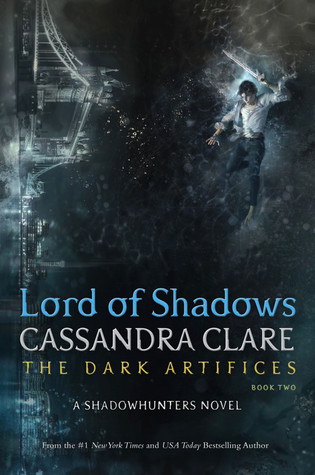
Life is never exactly easy for Shadowhunters, but it appears to be especially difficult right now for those who live in the Los Angeles Institute. They thought they knew Malcolm Fade, warlock extraordinaire. They though they could trust him. They counted him as a friend. And he betrayed them. All this time, he was working against them, killing to further his own agenda. Now, Malcolm is dead, and this tight-knit group of Shadowhunters is dealing with the fallout.
Emma Carstairs is the fierce Shadowhunter who killed Malcolm Fade. She did what she had to do, and she’d do it again to protect those she loves, particularly the Blackthorn family. This family, especially her parabatai Julian, means everything to her, and she’ll do whatever is necessary to keep them safe…even if it means sacrificing her wants, her needs, her very life. At present, it means driving a wedge between herself and Julian. She knows that romantic love between parabatai is cursed, and she simply can’t put Julian, the backbone of his family, through something so horrific, no matter how much they might love each other.
As for Julian, he is tormented by his feelings for Emma, the distance she’s putting between them, as well as the all-consuming need to keep his family safe. Safe from the increasing number of sea demons around them, safe from the Centurions who’ve all but invaded the Institute, safe from the knowledge that their Uncle Arthur, the official head of the Institute, is going mad and Julian’s been running things since he was a boy of twelve. It’s a lot for Julian to take in, but he’ll do anything for his family…even something like journey into Faerieland, something expressly forbidden by the Clave (Shadowhunters’ governing body).
Mark Blackthorn, Julian’s half-faerie brother, has received news that his former lover, Kieran, is about to be killed by the Unseelie King (who also happens to be Kieran’s father). Mark is determined to rescue Kieran, but he will not make the journey alone. Julian, Emma, and Christina, a trusted friend, accompany him, and the quest is just as fraught with danger as they feared it would be. With the help of the Seelie Court, they make it out alive, but they’ve made a dangerous enemy in the Unseelie King…and a dangerous ally in the Seelie Queen.
Back home at the Los Angeles Institute, those remaining are dealing with their own fight. Certain members of the Centurion force are poised to take over the Institute in an effort to further their own hateful agenda. This band of zealots wants to exert power over all Downworlders, and they think taking down the Blackthorn family is the way to do it. While this extremist group, known as the Cohort, is plotting, the Institute residents are also dealing with the unexpected return of a figure they thought was gone…Malcolm Fade himself.
As it turns out, it’s pretty difficult to kill a warlock, and Malcolm isn’t as dead as they had hoped. He’s returned, bringing an army of demons with him, and he remains determined to complete what he was trying to do before his untimely demise. With the help of the Black Volume, he plans to raise Annabell Blackthorn from the dead, and he won’t let anything get in his way. Annabell, however, may have other ideas.
Forced to flee the LA Institute, the younger Blackthorn siblings, Kit Herondale, and their tutor portal to the London Institute. There, they eventually join up with Emma, Julian, Mark, Christina, and Kieran (along with a couple of other familiar faces). They’re dealing with enemies on many sides, but they know they must prevail. They may have to make deals that are untenable, fight those who seem to be unbeatable, and put aside their own complicated feelings. The important thing is that they stay alive, put an end to the dangerous sentiments against Downworlders, and avoid war with the Unseelie King. Unfortunately, all of those things are easier said that done.
I’m going to stop there before I give too much more away. I’ve probably spoiled a lot here, but there is so much more to this book than I could have possibly touched on in one blog post (unless I wanted to spend the rest of the day writing…which I don’t). Lord of Shadows is a 700-page whopper, and every page is packed with something important, exciting, mysterious, infuriating, revealing, and, at points, tragic. The stuff I’ve touched on above is only a fraction of the wonderfully twisted story contained within this book.
Anyone who reads Lord of Shadows (or any of the Shadowhunter books, really) will find parallels to the world we live in today. No, we’re not dealing with demons, warlocks, faeries, or anything like that–that I know of–but we are dealing with discrimination and hatred of anything seen as different or “other.” In this book, a small but vocal group of extremists want warlocks to register, werewolves to be rounded up and put in camps, vampires to have their blood supply monitored, and faeries, for the most part, to be completely wiped out. The Shadowhunters who sympathize with Downworlders are viewed as traitors. Sound familiar? Once again, fantasy shines a light on the horrific reality we’re facing today and gives a glimpse of the destruction we could see if we allow such hatred to flourish. It’s sobering, to say the least.
So…where do we go from Lord of Shadows? The third book of The Dark Artifices, The Queen of Air and Darkness, isn’t expected to be released until sometime in 2019. Given how Lord of Shadows ended, the wait for book three may very well drive me insane.
On a positive note, there is another Shadowhunter series being introduced a bit sooner. Chain of Gold, the first book of The Last Hours, should be out in 2018. This series is set in 1903, and it centers around the generation following the events of The Infernal Devices series. There’s also an adult series focusing on Magnus Bane and Alec Lightwood, The Eldest Curses, on the horizon, as well as another YA series, The Wicked Powers, that will pick up at the end of The Dark Artifices. I know it’s a lot to take in, but this is nothing but good news if you’re a superfan of the Shadowhunter books.
For more information on Lord of Shadows and all things Shadowhunter, visit Cassie Clare’s website, Tumblr, Twitter, and Facebook. If you’re not a fan already, I hope you come to love this world as much as I do!
Scarlett Undercover
Scarlett Undercover by Jennifer Latham, another nominee for the 17-18 South Carolina Young Adult Book Award, is advertised as being perfect for fans of Veronica Mars. Well, I don’t know about that–given that I’ve never seen Veronica Mars–but it is an entertaining YA mystery which features an intelligent, brave, and snarky Muslim American heroine. Let’s dive in, shall we?
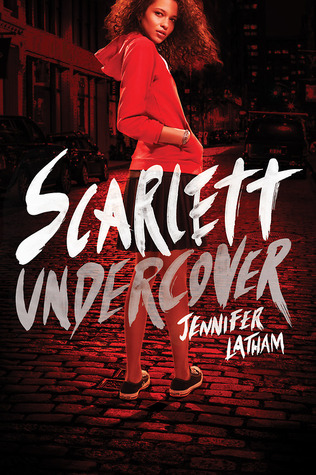
Scarlett, a brilliant teen who graduated early from high school, is a private detective in Las Almas. Following the deaths of both of her parents, Scarlett lives with her sister, Reem, a dedicated medical student. Both young women are trying to do right by their parents’ memories. For Reem, that means becoming a doctor. For Scarlett, that means helping others and trying to figure out who may have killed her father.
When young Gemma Archer seeks out Scarlett’s help, Scarlett is a little reluctant to take the case. How could she possibly prove that Gemma’s older brother, Oliver, was somehow involved in his friend’s suicide? But there’s something about Gemma’s concerns that draw Scarlett in, so she decides to investigate. She couldn’t possibly know that she would uncover a possible cult or a weird connection to her own family.
As Scarlett’s investigation continues, she realizes she’s close to uncovering some pretty dangerous secrets–secrets that people are willing to kill for. She’s being followed, and this case could be putting the people Scarlett cares about in harm’s way. So what does she do? Does she cut and run, or does she follow wherever the clues lead her? Well, Scarlett’s been accused of being stubborn in the past, and that hasn’t changed, so she’s in this for the long haul.
Scarlett is growing closer to solving this whole sordid mess, but what could it mean for her faith and her future? What ancient evil could be unleashed if she doesn’t succeed? Will she be able to solve this mystery and keep her loved ones safe? Answer these questions and many more when you read Scarlett Undercover.
While Scarlett Undercover kept my interest, this book was not without its flaws. Allow me to highlight just a couple.
The book didn’t provide a ton of background information before jumping right into the action. I actually wondered if the copy of the book I was reading was missing a prologue or something. I’m not a fan of books that begin in medias res, and that’s what this book felt like. It would have been nice, in my opinion, to get the full story of how Scarlett came to be a teenage private detective before the major part of the story started.
Another issue I have with Scarlett Undercover is the lack of character development. We know a fair amount about Scarlett since she’s the protagonist, but what about all of the secondary characters? Scarlett has a sister, a love interest, a helpful cop, a guardian angel, and so many other people in her life. I’d like more information on all of these people, but I especially want to know more about Scarlett’s relationship with her sister, how she met Decker and how their feelings for each other grew over time, and even her early family life with her parents. And that’s not touching on a lot of the other players in this mystery. We don’t even get to know a ton about the villains, and that is a tragedy.
Even with those faults (and a few others that I haven’t addressed), I do love that this book features a Muslim American heroine. I think readers of all faiths (or no faith) will find they have a lot in common with Scarlett, whether or not they happen to be Muslim…or a teenage girl who solves crimes. Maybe those commonalities could be starting points for finding common ground in areas other than YA literature. One can hope.
To learn more about Scarlett Undercover, visit author Jennifer Latham’s website. You can also connect with the author on Twitter and Facebook.
Denton Little’s Deathdate
What would you do if you knew the exact date of your death? I like to think I’d do all the stuff I was too scared, inhibited, or lazy to do normally, but I know myself well enough to realize that’s probably not how things would play out. The more likely scenario is that I would read as much as possible and take lots of naps. Know thyself, my friends.
I say all that to introduce my latest read, Denton Little’s Deathdate. In this morbidly funny book, our title character ponders what to do before he kicks the bucket. As a matter of fact, most people in the world deal with this big question. Thanks to an “advance” in medical technology, everyone knows his/her deathdate. They don’t know the exact minute or how they’re going to die, but the date appears to be set in stone. For seventeen-year-old Denton Little, that date is just a couple days away, and he’s got a lot to process before the big day.

Two days before his deathdate, Denton Little wakes up in a strange bed with his very first (and possibly last) hangover. Why is he in his best friend’s sister’s bed? He remembers flashes of the previous night, but most of it is a blur. Did something awesome happen with Veronica, or did he embarrass himself completely…or both?
Eventually, Denton Little manages to piece together some semblance of last night’s events, but he’s got other things to worry about today. For one thing, he has to get ready for his funeral. Oh joy. A night for everyone to say how sorry they are that he’ll no longer be with them. A night in which he has to make a speech and dole out hugs to relatives, friends, and treasured acquaintances. Denton can hardly wait.
Another thing worrying Denton in his last hours is the weird purple rash that is spreading all over his body. Did his activities with Veronica give him some sort of disease, or is it something else? Whatever it is, his entire body is turning purple, and it seems that he’s spreading this unknown virus to anyone he–ahem–shares saliva with. (There are a couple more people on that list than there should be, especially considering that Denton has a girlfriend whose name is most definitely not Veronica.)
To make things even more confusing for Denton, a weird guy shows up at his funeral, claims to have information about Denton’s mother, a woman who died shortly after giving birth to Denton, and warns Denton to beware of government officials. What could this guy want now, and how could this make any difference to Denton when he’s only got hours to live? And what could the government have to do with Denton or his mother? It’s quite the puzzle, and Denton’s running out of time to solve it.
Join Denton as he and his friends try to piece together what’s going on around them. What’s up with the weird purple rash? What does Denton’s mom have to do with his deathdate? And is there a way for Denton to cheat death when no one else has managed to? It’s a mystery…
Here’s a major spoiler if you’re still reading this post: Denton lives. I don’t feel too bad about revealing that since there is a second book to look forward to. The title itself could be considered spoilery to those who haven’t done their homework. It’s Denton Little’s Still Not Dead, and it was released in February. Given that book one ended on a pretty large cliffhanger, I’m hoping to make time to read book two as soon as possible.
Denton Little’s Deathdate is a nominee for the 2017-18 South Carolina Young Adult Book Award. Often, titles on this list are appropriate for middle grade readers. In my opinion, this is not one of those titles. Denton Little’s Deathdate is an awesome book, but I don’t think it’s a good fit for tweens and younger teens. It has a fair amount of sexy times and innuendo, alcohol and drug use, and irreverent humor (which is my favorite part of the book), and all of those things combined make it more suited to a mature teen audience. Before you recommend this book to younger teens, read it for yourself. You likely know best which of your readers are ready for a book like this and which aren’t.
To learn more about Denton Little’s Deathdate, visit author Lance Rubin’s cool, fun website. You can also connect with the author on Twitter and Instagram. For an extra bit of fun, check out the video below featuring Lance Rubin singing a lovely song about Denton Little’s Deathdate. The song alone makes me want to read everything this guy cares to write. Enjoy!
One for Sorrow
A month from today, Mary Downing Hahn’s newest spooky story, One for Sorrow, hits the shelves. It’s pretty well-known that I’m a wuss, so I figured this book would likely freak me out. I didn’t, however, expect it to scare the crap out of me–so much so that I couldn’t read it when it was dark outside. I don’t know how most young readers will respond to the book (the target audience is 4th-6th grade according to Booklist), but I found it to be absolutely terrifying. That’s probably all I need to say to make sure it flies off my library shelves (if I make the decision to purchase it).

The year is 1918. America is involved in a world war, and an influenza epidemic has gripped many communities. Annie Browne and her family have just moved to town. She is the new girl at school, and she’s nervous about making friends.
Someone claims Annie as a best friend almost immediately, but Annie’s not so sure she truly wants to be friends with Elsie, a strange, violent, and manipulative girl who won’t let Annie play or befriend the other girls at school. Annie’s a bit scared of Elsie, and she’s not sure how to free herself from her “friend’s” clutches.
Eventually, when Elsie’s out of school for a couple of days, Annie gets her chance to befriend some other girls and escape Elsie’s influence. Annie even joins her new friends in mocking Elsie. She feels a little guilty about making Elsie miserable, but she doesn’t want to do anything to jeopardize her friendship with the other girls. Besides, Elsie brings a lot of this negative attention on herself.
While Annie and her new friends are tormenting Elsie, the horrible Spanish Influenza has hit their town. Dozens of people are dying each day. Schools and businesses close, and people are taking all the precautions they can to keep from getting sick.
One of Annie’s friends, Rosie, gets the bright idea to take advantage of the situation. She comes up with a plan to visit all the homes with black wreaths on the door, pretend to know the deceased, and load up on all of the cookies, candy, and cakes left for the mourners to eat. As for Annie, she does not want to see any dead bodies, but she goes along with Rosie’s morbid plan. (It’s hard to say no to Rosie.) Things are going okay with this whole scheme…until they recognize a girl lying in a coffin. It’s Elsie, Annie’s former “best friend” and the target of the girls’ relentless teasing.
Annie feels horrible about Elsie’s death, and she wonders if she and her friends may have had something to do with it. Annie’s feelings only intensify when she realizes that Elsie hasn’t gone very far. Her ghost has returned and is determined to make Annie her eternal best friend…or else.
Annie doesn’t know where to turn. Elsie, the very definition of a vengeful spirit, is turning everyone against Annie, making her say and do things she would never normally do, and convincing her friends, her teachers, and even her parents that Annie is going crazy. If Elsie doesn’t cross over soon, Annie’s entire world will be upended.
Is there any way for Annie to rid herself of Elsie for good, or will she forever be the focus of Elsie’s rage? Read One for Sorrow by Mary Downing Hahn to find out!
One for Sorrow is a great fit for middle grade readers. I’m on the fence right now about recommending it to upper elementary readers. I’ll do a bit more research and read other reviews before I decide whether or not to place it in my elementary school library. If you’d like to weigh in on this, please let me know what you think in the comments.
In addition to being an excellent scary story, One for Sorrow teaches readers about the horrors of the flu epidemic of 1918 as well as providing a cautionary tale about bullying. Now, I’m not saying bullies will be haunted by the ghosts of those they tormented or anything, but it’s clear that there was bad behavior on all sides here. Elsie was horrible to Annie and the other girls in school, but did that mean the other girls should have been equally horrible? No, it did not. I think the lesson here is that you never know what someone else is going through, and a little kindness goes a long way.
If you’d like to read this gripping novel for yourself, One for Sorrow will be available on July 18th. It’s definitely a page-turner that will be hard to put down. For more information on this book and others by Mary Downing Hahn, visit the author’s website.
Bayou Magic
As I continue making my way through the nominees for the 2017-18 South Carolina Children’s Book Award, I have to commend the SCCBA committee on this list. I’ve read sixteen of the twenty titles so far, and there’s not a stinker in the bunch. Even the book with the dog on the cover–something that I usually avoid–is good. Many of my young readers will have a tough time choosing their favorite nominee when we vote in February. (Click here if you’d like to see a promo video for the SCCBA titles.)
I tell you all of that to introduce my latest read, another SCCBA nominee, Bayou Magic by Jewell Parker Rhodes. This book is a spell-binding, compelling read that takes place in the Louisiana bayou in the summer of 2010, right around the time of the Deepwater Horizon oil spill. The story revolves around Maddy, a young girl learning about her heritage, what it means to be a friend, and the magic that lives within her.
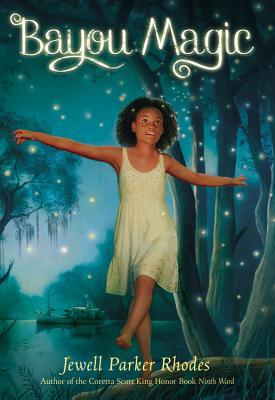
Like her older sisters before her, Maddy is spending the summer with her grandmother in Bayou Bon Temps. There will be no phones, no Internet, no television, no air conditioning. Just Maddy, her grandmère, and a rather simple life on the bayou. Maddy soon learns, however, that her summer here will be anything but simple.
Grandmère sees something in Maddy that her sisters didn’t possess. Maddy has a love for the bayou, its mysteries, and its people. She’s in touch with the magic of her ancestors, those who traveled from Africa in the most horrible of circumstances.
Grandmère teaches Maddy to read the signs around her, and soon Maddy can call fireflies, sense when danger is coming, and perhaps even communicate with an ancient mermaid. Maddy is the only one who can see this strange being, known as Mami Wata, so can she possibly be real? Both Grandmère and Maddy’s new best friend, Bear, seem to think so. Sometimes a person just needs to have a bit of faith.
As Maddy becomes more sure of her newfound abilities, she realizes that something bad is headed for the bayou. She can’t stop the event–a catastrophic oil spill–from happening, but maybe she can do something about the impact of the spill on the bayou.
Calling on her mermaid friend, Mami Wata, Maddy uses her magical heritage and everything Grandmère has taught her to protect Bayou Bon Temps and all who call it home. Will it be enough? Will this disaster touch this place and its people in some other way? Whatever happens, can Maddy be a true friend and hero in both good times and bad?
Bayou Magic is an enthralling book that showcases the beauty of a simple life, exploring nature with friends, finding solace in silence, and getting to know the people and environment around you. (I must admit that I’m okay with the silence part, but I’m usually not one for getting to know nature or other people. Also, I’d probably go crazy without WiFi.) It also emphasizes spending time with elders, learning from them, and respecting one’s cultural traditions.
If I have one issue with this book, it’s that the ending feels a little rushed. Maddy’s journey back home from her bayou summer is rather abrupt. I’d like to know more about what happens between the book’s major culminating event and Maddy’s trip back to New Orleans. All in all, though, that’s a rather minor complaint for what is otherwise an excellent book.
Bayou Magic is a wonderful work of magical realism, but this story is also about courage, friendship, family, faith, protecting the environment, and honoring one’s culture. All of these things combine to make a truly magical book. I hope my students agree.
Bayou Magic is a great fit for upper elementary and middle grade readers. It’s accessible and easy-to-read, and it features a dynamic African-American protagonist, something we need much more of in children’s literature.
If you’d like more information on Bayou Magic or other works by Jewell Parker Rhodes, please visit her website, Facebook, or Twitter. You may also want to check out the awesome book trailer for Bayou Magic below. Enjoy!
 Knight Reader